In the classroom
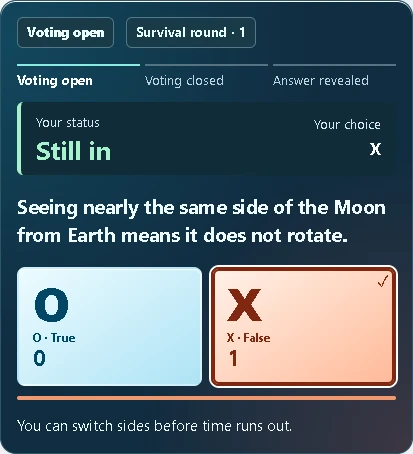
Start with the Moon question. Let the two sides form without giving away the answer. After the reveal, invite one explanation from each side before moving on to the solar system.
OX Survival · Host guide
Use one verifiable claim per statement. Qualify words like “always”, check the answer, and prepare one sentence explaining why before you open the room.
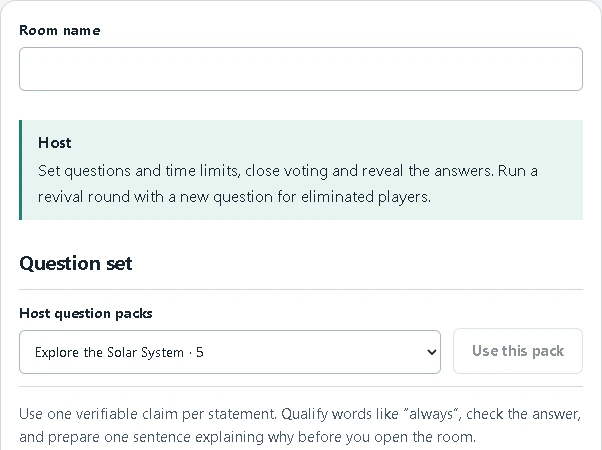
Use one verifiable claim per statement. Qualify words like “always”, check the answer, and prepare one sentence explaining why before you open the room.
Review the questions in the browser that created the room and share the invite link. The published examples include answers, so write fresh questions for a competition. Open the audience screen separately to show the statement and counts without granting host access.
Start with the Moon question. Let the two sides form without giving away the answer. After the reveal, invite one explanation from each side before moving on to the solar system.
Open the audience link on the projector and share the room code. If many players go out in the opening round, run the next statement as a revival. Check the survivor count before announcing winners.
The Moon rotates. Its rotation and its orbit around Earth take about the same time, so nearly the same side faces us.
The Pacific basin covers more area than either the Atlantic or Indian basin. This comparison is about area, not depth.
Mercury is closest to the Sun, but Venus has the hotter average surface because its thick atmosphere traps heat.